English
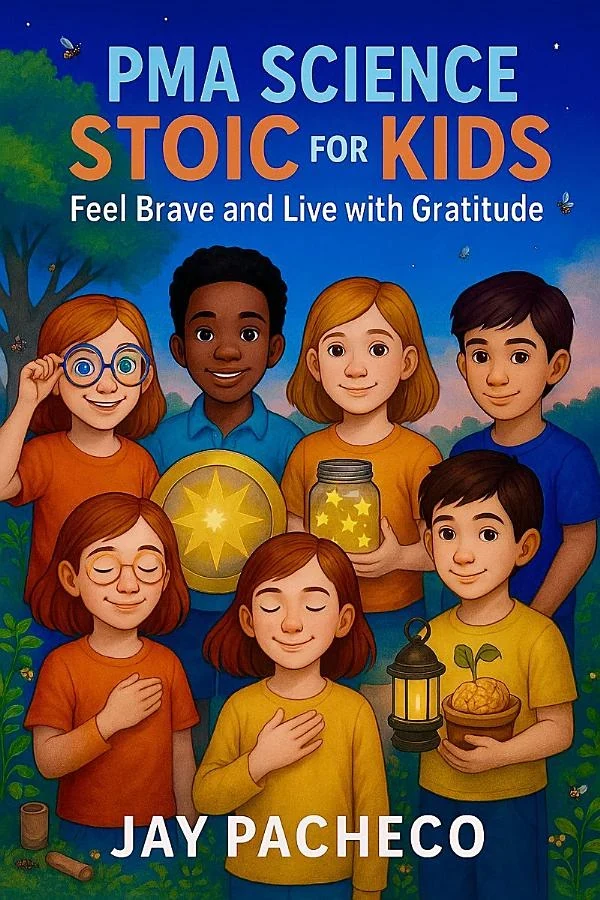
PMA Science Stoic for Kids
Feel Brave and Live with Gratitude · Manuscript preview
Stories, questions and small activities introduce children to courage, gratitude, emotions, friendship and fair choices. Ancient Stoic ideas meet everyday situations, with lessons from nature and challenges to try at home or school. Read a complete chapter from the manuscript while the final downloadable edition is being prepared.
Chapter 11: The Inner Scientist — Observe, Question, Learn · Manuscript preview
Chapter 11: The Inner Scientist — Observe, Question, Learn
“The unexamined life is not worth living.”
— Socrates
Curiosity Is Your Superpower 🌟
Have you ever asked “Why?” so many times that adults got tired of answering?
That’s not being annoying—that’s being a scientist of life.
Curiosity is how we discover truths about the world, about people, and about ourselves.
Every great scientist, philosopher, and explorer started with a question.
And so can you.
* * *
The Socratic Method: Ask, Don’t Assume 🏛️
Socrates, a philosopher from ancient Greece, had a special way of learning:
· He didn’t give people answers.
· He asked them questions until they discovered the truth on their own.
This is called the Socratic method.
Instead of saying “I know everything,” Socrates said, “Let’s find out together.”
* * *
The Stoic Way of Observation 👀
The Stoics, like scientists, believed in careful observation before responding and reacting.
· When someone makes you angry → ask: “Why do I feel this way?”
· When something seems scary → ask: “Is it really dangerous, or just my imagination?”
· When you face a problem → ask: “What can I control, and what can’t I?”
Observation turns emotions into teachers, not enemies.
* * *
Mini-Story: The Detective of the Mind 🕵️
Sophia loved mysteries. One day, her little brother broke her toy car. She felt angry, ready to burst out shouting.
But instead of exploding, she asked herself questions:
· Why am I angry?
· Can yelling fix the car?
· What else can I do?
She realized anger wouldn’t help. Instead, she asked her dad for tape and fixed the toy. Her questions led to wisdom.
Sophia became a detective of her own mind.
* * *
The Psychology of Questions 🧠
Scientists know that when we ask questions, our brains light up like fireworks. 🎆
Questions help us:
36. Think more deeply for an understanding.
37. Find solutions.
38. Stay calm instead of reacting too quickly.
That’s why curiosity isn’t only fun—it’s also powerful.
* * *
Your Challenge: The Why Game 🎲
· Choose something that bothers you (such as homework, chores, or waiting).
· Ask “Why?” at least 3 times.
· Example: “Why do I hate homework?” → “Because it feels long.” → “Why does it feel long?” → “Because I rush and don’t focus.” → “Why do I rush?” → “Because I want to play.”
· Now look for a solution. (Maybe do homework in small parts, then play.)
By asking “Why?” you dig deeper, like a scientist searching for treasure.
Reflection Question
👉 What’s one big question about life, people, or yourself that you would like to explore?